Step-by-Step: How to Use a Coolant Vacuum Refill Kit
TL;DR: A coolant vacuum refill kit removes air from the cooling system and then pulls fresh coolant back in under vacuum, which helps prevent air locks, uneven filling and post-repair overheating. In most UK workshop and home garage situations, it is a faster and more reliable method than manual bleeding, especially on modern vehicles with complex cooling circuits.
Key Takeaways
- A coolant vacuum refill kit removes air from the cooling system before drawing fresh coolant back in, helping prevent air locks and incomplete fills.
- For UK workshops and home mechanics, it is usually faster and more reliable than traditional manual bleeding, especially on modern vehicles with complex cooling circuits.
- Before refilling, always check for leaks, confirm adapter fitment and make sure the engine is completely cold.
- A combined pressure and vacuum system, such as CoolTest’s professional 2-in-1 setup, helps diagnose radiator leaks accurately and refill coolant without trapped air.
- If you are unsure whether to pressure test or vacuum refill first, start by understanding the difference between the two jobs: leak diagnosis and air-free refilling.
A coolant vacuum refill kit is used to evacuate air from a vehicle’s cooling system and then refill it with coolant without trapping bubbles inside. As a result, it helps reduce the risk of air locks, poor heater performance, fluctuating temperatures and overheating after coolant changes or cooling system repairs.
Air trapped in a cooling system can turn a routine coolant change into a comeback job. Poor cabin heat, fluctuating temperature readings, unexplained coolant loss and overheating after a refill are all common signs that the system has not been properly evacuated or bled. That is exactly why the coolant vacuum refill kit has become a go-to tool in UK workshops.
At CoolTest, the focus is simple: provide a Professional Coolant Pressure Tester & Vacuum Refill Kit that helps technicians diagnose radiator leaks accurately and refill coolant without trapped air. Based on our testing on modern UK-spec cooling systems, vacuum refilling is often more consistent than relying on manual bleed points alone.
This guide explains what a coolant vacuum refill kit does, why many British mechanics prefer it over manual bleeding, and how to use one step by step. If you are comparing tools first, our UK Guide to Choosing a Cooling System Pressure Tester is a useful starting point for understanding system testing equipment in more depth.
What is a coolant vacuum refill kit?
A coolant vacuum refill kit is a workshop tool designed to evacuate air from an automotive cooling system using compressed air and venturi action. Once the system is under vacuum, the tool draws premixed coolant back into the engine, radiator and associated hoses without relying solely on gravity or manual bleed points.
In practical terms, it performs two important jobs:
- Removes trapped air from the cooling system before refilling.
- Refills coolant quickly and evenly, helping reduce the risk of hot spots and air locks.
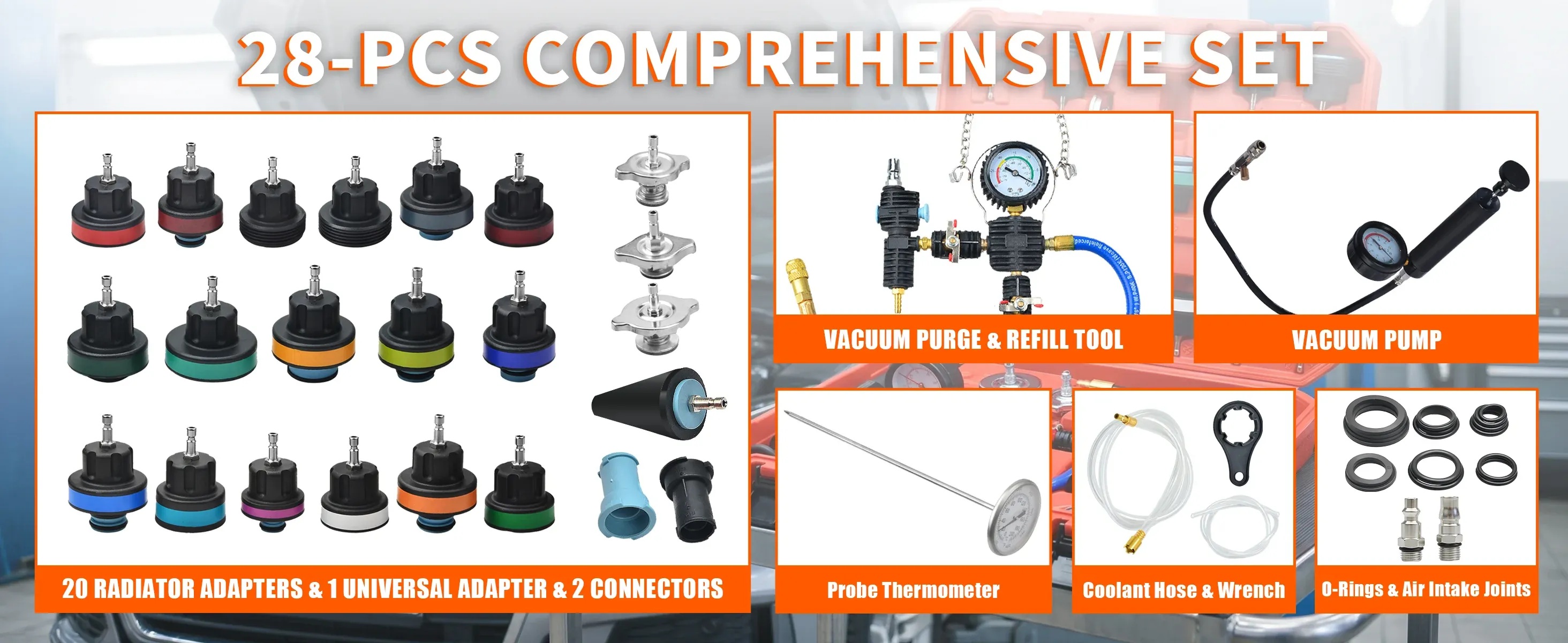
What parts does a coolant vacuum refill tool include?
Most kits include:
- A gauge to monitor vacuum level
- A valve assembly
- A hose for drawing in fresh coolant
- Tapered or adapter fittings for different radiator necks or expansion tanks
- An airline connection for compressed air supply
How is it different from manual bleeding?
Traditional bleeding usually involves filling slowly, opening bleed screws where fitted, running the engine up to temperature and topping up repeatedly. That process can work well on simpler systems. However, many newer vehicles have tighter packaging, heater circuits, EGR cooling loops or awkward bleed points that make manual bleeding less predictable.
By contrast, a vacuum-based refill method tackles the problem at source by removing air first. Instead of trying to chase bubbles out afterwards, you create negative presnside the system and let that pressure difference pull coolant into spaces that would otherwise trap air.
Is vacuum refilling a proven workshop method?
Yes. Vacuum refilling has long been used in professional garages because it improves consistency. Based on our testing and workshop feedback, it is especially useful after replacing radiators, thermostats, water pumps, hoses and heater-related components. For businesses supporting essential fleets, including community transport and NHS-related service vehicles maintained by contractors, reliability after repair is critical.
Why use a coolant vacuum refill kit instead of bleeding the system?
Does it reduce the risk of air locks?
Yes, in many cases it does. Many British workshops now see cooling systems that are far more complex than older top-hose-and-radiator layouts. Turbocharged engines, compact engine bays and multiple thermal management components make manual bleeding more time-consuming. Therefore, a good coolant refill tool reduces the likelihood of leaving pockets of air behind after replacing radiators, thermostats, water pumps or hoses.
Is it faster for busy UK workshops?
Time matters in every garage environment. According to the Society of Motor Manufacturers and Traders (SMMT), the UK car parc exceeded 41 million vehicles in 2023, reflecting sustained demand for servicing and repair across Britain’s independent workshops and dealer networks alike.
With so many vehicles on UK roads, efficiency matters. A vacuum refill process can often shorten the refill stage compared with repeated fill-run-cool-top-up cycles. Consequently, there is less ramp time tied up on routine cooling work.
Does it improve confidence after cooling system repairs?
If you have just replaced a leaking radiator or split hose, the last thing you want is uncertainty about whether poor heater output or rising temperatures are due to remaining leaks or trapped air. Using an integrated setup that combines an automotive cooling system tester with vacuum refill capability helps separate those two issues clearly:
- Pressure test first to check for external leaks.
- Vacuum refill second to refill cleanly without trapped air.
Why do UK garages prefer this method?
British garages operate in an environment where professional standards matter. Customers expect accurate diagnosis rather than parts-swapping. According to general UK workshop safety practice, technicians should also minimise the risk of overheating and coolant loss after repairs by following a repeatable refill process. If you want to compare tool types in more detail, read our guide on the differences between a pressure tester and refill setup here: Coolant Pressure Tester vs Vacuum Refill Kit Guide.
How do you use a coolant vacuum refill kit step by step?
1. Let the engine cool fully
Never open a pressurised cooling system when hot. Hot coolant can cause serious burns. So, start only when the engine is fully cold and safe to work on.
2. Check the system for obvious leaks first
Before applying vacuum, inspect hoses, clips, the radiator, thermostat housing, expansion tank and water pump area. If the system has a major leak, it may not hold vacuum properly. Based on our testing, obvious hose or adapter leaks are among the most common reasons a vacuum refill appears not to work.
3. Confirm you have the correct adapter fitment
Select the correct tapered cone or adapter for the radiator neck or expansion tank. A poor seal will reduce vacuum and can give misleading gauge readings. Therefore, take a moment to make sure the connection is snug and stable before proceeding.
4. Connect the vacuum refill kit to the cooling system
Fit the tool securely to the filler neck or header tank opening, then connect the airline supply according to the manufacturer’s instructions. Keep the coolant draw hose ready, but do not place it into coolant yet unless your tool instructions specify otherwise.
5. Pull a vacuum on the cooling system
Open the air valve to create vacuum in the system and watch the gauge. Most technicians wait until the gauge reaches the recommended vacuum level for the tool being used. Then close the valve and monitor the reading briefly.
If the vacuum drops quickly, there may be:
- A leak in the cooling system
- A poor adapter seal
- A loose hose or valve connection on the tool itself
6. Check whether the system holds vacuum
This step matters because it helps confirm the system is sealed well enough to refill properly. If the gauge remains stable, the setup is usually ready to draw in coolant. However, if it falls away, inspect the vehicle and tool connections again before continuing.
7. Place the refill hose into premixed coolant
Put the coolant hose into a clean container of the correct premixed coolant. In the UK, always use coolant that meets the vehicle manufacturer’s specification. Mixing incompatible coolant types can reduce corrosion protection and cause long-term cooling system issues.
8. Open the refill valve and let coolant flow in
Once the hose is submerged, open the refill valve. The vacuum inside the cooling system will draw coolant in quickly. As a result, the engine, radiator and hoses fill more evenly than they often do with gravity alone.
9. Disconnect the tool and recheck the level
After the coolant flow stops and the system is filled, remove the tool carefully and recheck the coolant level in the expansion tank or filler neck. Then top up only if required.
10. Run the engine and verify normal operation
Start the engine, bring it up to operating temperature and confirm that the heater works properly, the cooling fans cycle as expected and there are no leaks. Finally, allow the vehicle to cool and recheck the level if the manufacturer recommends a final inspection.
What should you do before using a coolant vacuum refill kit?
Check coolant specification
Always confirm the correct coolant type for the vehicle. In UK workshop practice, using the wrong OAT, HOAT or other specification can cause avoidable problems, even if the refill process itself is carried out correctly.
Use clean premixed coolant where possible
Using clean premixed coolant helps maintain the correct concentration and reduces contamination risk. If mixing concentrate, use deionised water where required by the coolant manufacturer.
Make sure compressed air supply is suitable
Most vacuum refill kits rely on compressed air to create venturi vacuum. So, check that your airline supply is dry, stable and within the tool’s operating range.
Inspect the tool before each job
Check the gauge, valves, seals and hoses for wear or damage. A leaking tool can mimic a leaking vehicle cooling system and waste time during diagnosis.
Can a coolant vacuum refill kit find leaks?
Not directly in the same way as a pressure tester. A vacuum refill kit can show that a system is not holding vacuum, which may suggest a leak or sealing problem. However, for proper leak diagnosis, a dedicated cooling system pressure test is usually the better first step.
That is why many professionals prefer a combined setup. First, pressure test the cooling system to identify external leaks. Then, once repairs are complete, vacuum refill the system to reduce trapped air. At CoolTest, that 2-in-1 workflow is central to how our professional kit is designed to be used.
Is a coolant vacuum refill kit worth it for home mechanics?
Yes, if you regularly work on your own vehicles or maintain family cars, vans or light commercial vehicles, it can be worthwhile. It is especially useful on modern vehicles where manual bleeding is awkward or where air locks have caused trouble before.
For occasional users, the value depends on how often you carry out cooling system work. However, if you have ever had to refill, run, cool, top up and repeat several times, a vacuum refill tool can save considerable time and frustration.
What are the most common coolant vacuum refill kit mistakes?
Using the tool on a hot engine
This is unsafe and should never be done. Always work on a fully cold engine.
Using the wrong adapter
If the adapter does not seal properly, the system may not pull or hold vacuum.
Skipping leak checks
If there is a genuine cooling system leak, vacuum readings can be misleading. Therefore, inspect and, where needed, pressure test first.
Using incorrect coolant
Even a perfect refill will not compensate for the wrong coolant specification.
Assuming every issue is trapped air
Poor heater output or overheating can also be caused by thermostats, water pumps, fans, control valves or head gasket faults. So, use the refill process as part of a proper diagnosis, not as a substitute for one.
Frequently asked questions about coolant vacuum refill kits
What does a coolant vacuum refill kit do?
It removes air from the cooling system and then draws coolant back in under vacuum, helping prevent air locks and incomplete fills.
Do you need to pressure test before vacuum refilling coolant?
It is often best practice to pressure test first if a leak is suspected, then vacuum refill once repairs are complete.
Can a coolant vacuum refill kit remove all air from the system?
It is designed to remove most trapped air before refill, which is why it is generally more reliable than manual bleeding on complex systems.
Why is my cooling system not holding vacuum?
Common causes include a leak in the cooling system, a poor adapter seal, or a loose hose or valve connection on the tool.
Is a coolant vacuum refill kit suitable for UK home mechanics?
Yes, especially if you work on modern vehicles and want a cleaner, quicker and more reliable way to refill coolant without trapped air.
Final thoughts
A coolant vacuum refill kit is one of the most effective ways to refill a cooling system cleanly and reduce the risk of trapped air. For UK workshops, it supports faster turnaround and more reliable post-repair results. For experienced home mechanics, it can also make coolant servicing far more straightforward.
Based on our testing, the best results come from using vacuum refill as part of a complete process: inspect first, pressure test if needed, refill under vacuum, then verify proper operation. That approach helps reduce repeat faults and gives greater confidence that the job has been done properly the first time.
Ready to speed up your diagnostics with CoolTest?
Upgrade Your Workshop — £223.60