UK Guide to Choosing a Cooling System Pressure Tester
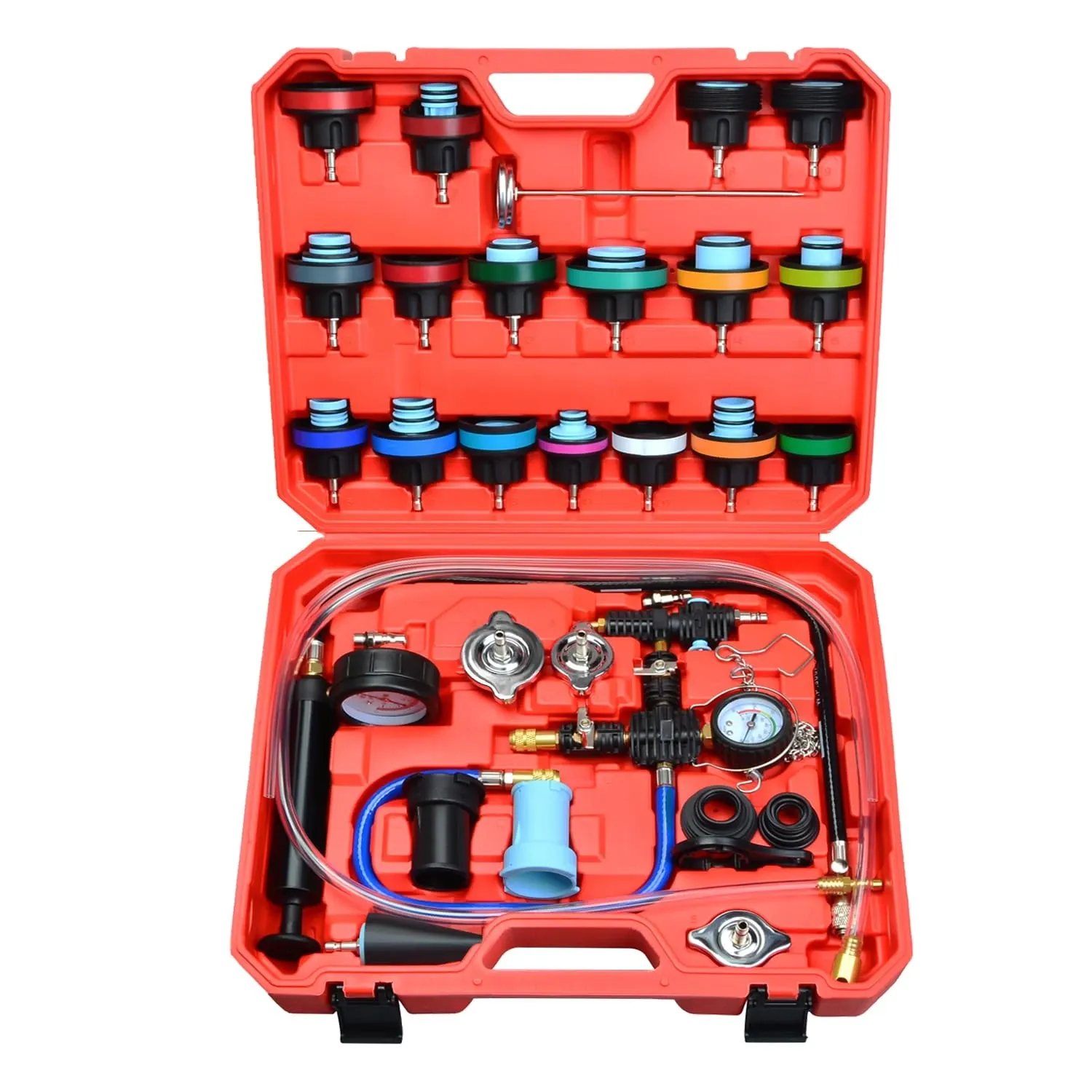
A cooling system pressure tester is a tool used to find coolant leaks by pressurising the radiator or expansion tank with the engine switched off. It helps you trace faults in hoses, radiators, water pumps, heater circuits, caps and tanks more safely and more accurately than guessing from symptoms alone.
TL;DR: If your car is losing coolant, overheating or needing repeated top-ups, a cooling system pressure tester is one of the quickest ways to confirm whether the system holds pressure. Based on our testing at CoolTest, the best kits for UK garages and serious DIY users combine a clear gauge, dependable pressure retention, strong adapters and vacuum refill capability to reduce repeat jobs and trapped air.
A small coolant leak can turn into an overheated engine, a roadside recovery bill and a repair invoice that quickly runs into the hundreds. In the UK, where stop-start traffic, short journeys and cold winter starts all put stress on cooling systems, a reliable cooling system pressure tester is one of the most practical diagnostic tools a garage or serious DIY owner can buy.
At CoolTest, we focus on tools built for real workshop use. Our core proposition is simple: a Professional Coolant Pressure Tester & Vacuum Refill Kit designed as an effective 2-in-1 workshop solution to diagnose radiator leaks accurately and refill coolant without trapped air. This guide explains what a cooling system pressure tester does, how it works, what features matter in the UK market, and how to choose a kit that saves time while improving diagnostic accuracy.
If you maintain modern petrol, diesel or hybrid vehicles, pressure testing is no longer an optional extra. Instead, it is a fast, evidence-based method for finding leaks in radiators, hoses, water pumps, heater circuits, expansion tanks and caps before they cause overheating or repeated coolant loss.
Key Takeaways
- A cooling system pressure tester helps identify coolant leaks by pressurising the system when the engine is off, making faults easier and safer to trace.
- Look for a kit with a clear gauge, stable pressure retention, durable hoses, broad adapter compatibility and vacuum refill capability for maximum workshop value.
- Common warning signs include unexplained coolant loss, overheating, a sweet smell in the cabin, visible drips, low heater performance and repeated top-ups.
- UK buyers should prioritise compatibility with British and European vehicle makes, easy adapter identification and robust construction suitable for trade use.
- Using a pressure tester alongside a vacuum refill tool helps diagnose leaks and refill coolant without trapped air, therefore reducing repeat jobs.
What is a cooling system pressure tester?
A cooling system pressure tester is an automotive diagnostic tool that pressurises the cooling circuit through the radiator neck or expansion tank using the correct adapter. The aim is simple: check whether the cooling system holds pressure or loses it through an external or internal fault.
In practice, this means you can investigate overheating, coolant loss and poor heater performance without waiting for symptoms to appear during normal driving. As a result, faults are often easier to confirm in the workshop or on the driveway.
According to UK workshop practice, controlled testing is preferable to guesswork because replacing thermostats, radiators or caps without proof can add unnecessary cost. Based on our testing with multi-adapter kits across common UK vehicle applications, stable gauge readings and secure adapter fit make a noticeable difference to diagnostic confidence.
Why would you use a cooling system pressure tester?
An engine’s cooling system is designed to keep temperatures within a controlled operating range. However, if pressure drops because of a leak, coolant can escape, boiling points can be affected and engine temperature can climb rapidly. That is why professional technicians often start with a radiator pressure tester or broader automotive cooling system tester when investigating overheating or coolant loss.
Pressure testing works because it recreates operating stress without needing the engine to be fully hot and running. Instead of waiting for a fault to appear on the road, you apply controlled pressure to the cooling circuit and check whether the system holds steady. If the needle drops or coolant appears externally, the leak path becomes much easier to identify.
This matters in both trade and home maintenance settings. The RAC has reported heavy seasonal demand during hot weather breakdown periods, with heat placing extra strain on vehicles. Therefore, checking for cooling-system weakness before it becomes an overheating event is sensible preventative maintenance for UK motorists.
For garages, accurate testing protects workshop efficiency. For DIY owners, it helps avoid guesswork and unnecessary parts replacement. In short, a quality cooling system pressure tester brings evidence into the process.
What are the signs your car needs a cooling system pressure test?
Not every cooling fault announces itself with steam from under the bonnet. In many cases, leaks are small, intermittent or hidden. A pressure test is especially useful when symptoms are present but the source remains unclear.
Why is my car losing coolant with no visible leak?
If the expansion tank level keeps dropping and there is no obvious puddle on the drive, the system should be tested. Coolant may be escaping from a hairline radiator crack, a weakened hose connection, the water pump seal, heater matrix pipework or the pressure cap.
Can low cooling-system pressure cause overheating?
Yes. A vehicle that climbs above normal operating temperature, especially in traffic or under load, may have a leak reducing coolant volume or pressure. A radiator pressure tester can help determine whether the system is losing integrity.
Does a sweet smell inside the car mean there is a coolant leak?
A sweet smell from the vents, damp carpets or persistent window misting can point to heater matrix leakage. Pressure testing may reveal falling system pressure while inspection inside the cabin may confirm the fault location.
What does dried coolant residue look like?
Coolant often leaves white, pink, blue or orange residue depending on its formulation. Around hose joints, radiator end tanks, thermostat housings and water pumps, these traces are classic warning signs of seepage.
Can poor cabin heat mean there is an issue with coolant circulation?
If the heater blows lukewarm air even after the engine has warmed up, low coolant level or trapped air may be involved. Therefore, a leak test followed by correct vacuum refill is often the right sequence. For more detail see Step-by-Step: How to Use a Coolant Vacuum Refill Kit.
Why does my cooling system keep needing to be bled?
If air keeps returning after repairs, there may be an unresolved external leak or a refill process that introduces air pockets. In that case,a combined pressure tester and vacuum refill solution can save time while improving results.
Ready to speed up your diagnostics with CoolTest?
Upgrade Your Workshop — £223.60