Heater Matrix Leak Pressure Test Uk
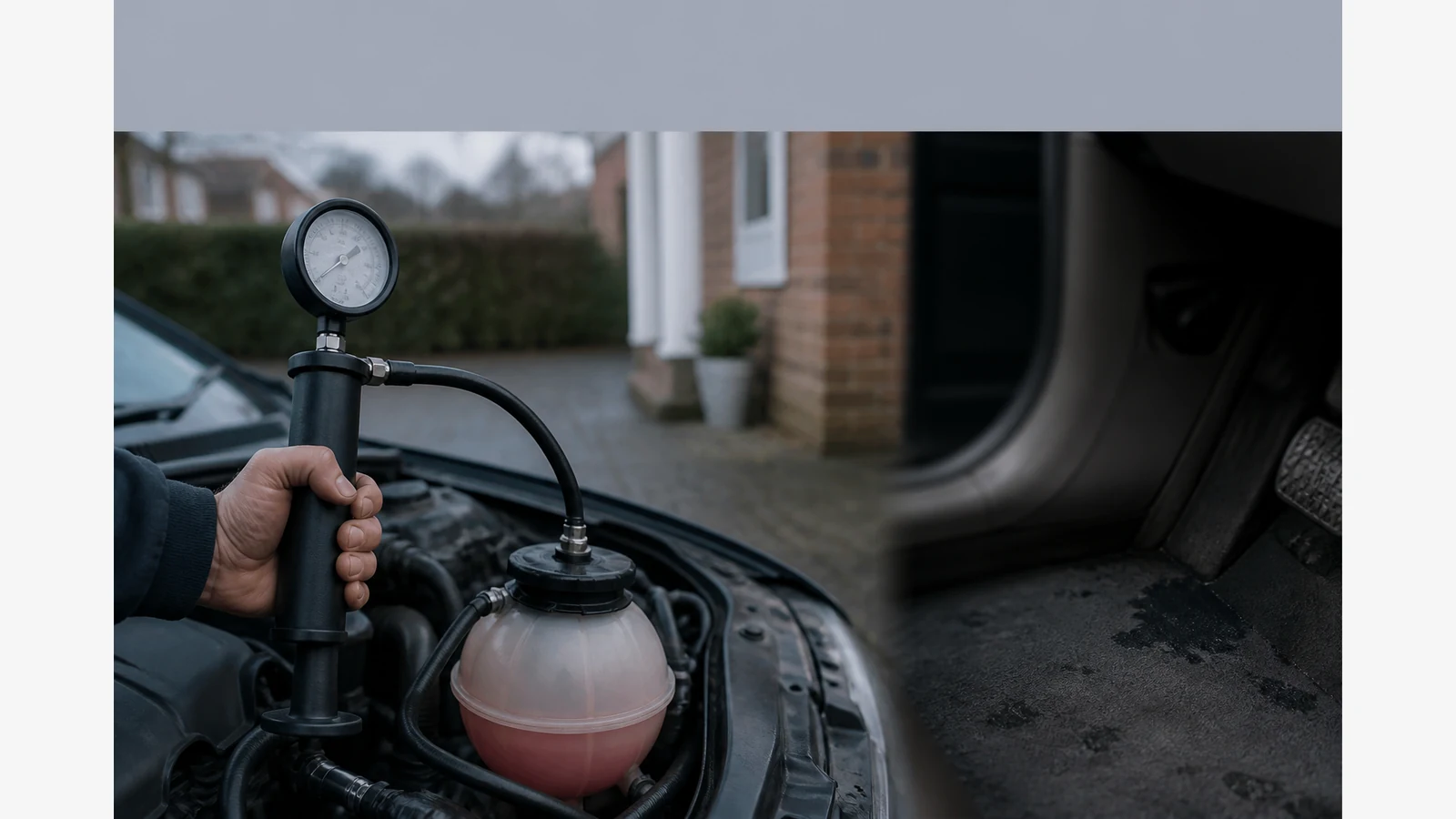
If you can smell sweet coolant from the vents and the level keeps dropping, treat a heater matrix (or cabin-side pipework) leak as a likely cause — but confirm it with a cold cooling-system pressure test before you pull the dash. A hand-pump tester recreates operating pressure while the engine is cold, so you can watch the gauge and look for damp carpets, greasy glass or wet heater pipes without opening a hot system.
UK symptom cluster that points cabin-side
UK guides commonly link a sweet smell in the cabin to the heater matrix or nearby pipework, especially when the smell is strongest with the heater on, the windscreen mists or feels greasy, and the passenger footwell feels damp. A falling coolant level with little or no engine-bay puddle fits the same pattern, though washer fluid and other vapours can smell sweet too — so do not dismantle on smell alone. See the symptom language summarised by Motor Vehicle Expert on coolant smells.
Cold pressure-hold checklist
- Wait until the cooling system is fully cold. Never remove a pressurised hot cap.
- Fit the correct expansion-tank or radiator adapter so the seal is square and undamaged.
- Connect the hand pump and gauge, then pressurise only to the vehicle/cap rating (often around 1.1 bar / about 15–16 psi on many UK cars). Do not exceed the rating.
- Hold pressure and watch the gauge. A falling needle means the system is not sealed under pressure.
- While pressure is applied, inspect the engine bay for spray or dribble, then check cabin clues: carpets, heater pipes at the bulkhead, and any damp under the dash.
Haynes Manuals UK explains pressure testing for coolant leaks: the tester mimics hot-system pressure cold, and a gauge drop indicates a leak path.
How to read cabin-side confirmation
If the gauge falls and you find moisture on carpets or heater pipes with no obvious bay puddle, the leak is likely on the cabin side of the loop. Professional UK kits are designed to pressurise the whole circuit so heater matrix, water pump, radiator and header/expansion tank leaks can show under pressure — see how Laser Tools describes cooling-system pressure-test kits.
If the gauge holds steady, keep an open mind: intermittent heat-only leaks can still appear later, and non-coolant smells remain possible. For heat-only loss with no puddle, use the sibling intermittent coolant leak pressure-test guide. For smell-first driveway triage without assuming a matrix leak, see coolant smell with no puddle.
Who should not DIY the next step
Stop and book a garage if the vehicle is a high-voltage hybrid/EV with cooling circuits you are not trained on, or if confirming the repair needs airbag and dash teardown without the correct procedure. Scalding risk also means never forcing a hot system open to “check quickly”.
After you find (or rule out) the leak
Repair the confirmed path, then pressure-retest cold before a road test. Only shop for a multi-adapter hand-pump kit if you repeatedly diagnose cooling leaks and need the adapters and pump on the driveway or in the bay — this guide does not require a purchase to follow the diagnostic path.