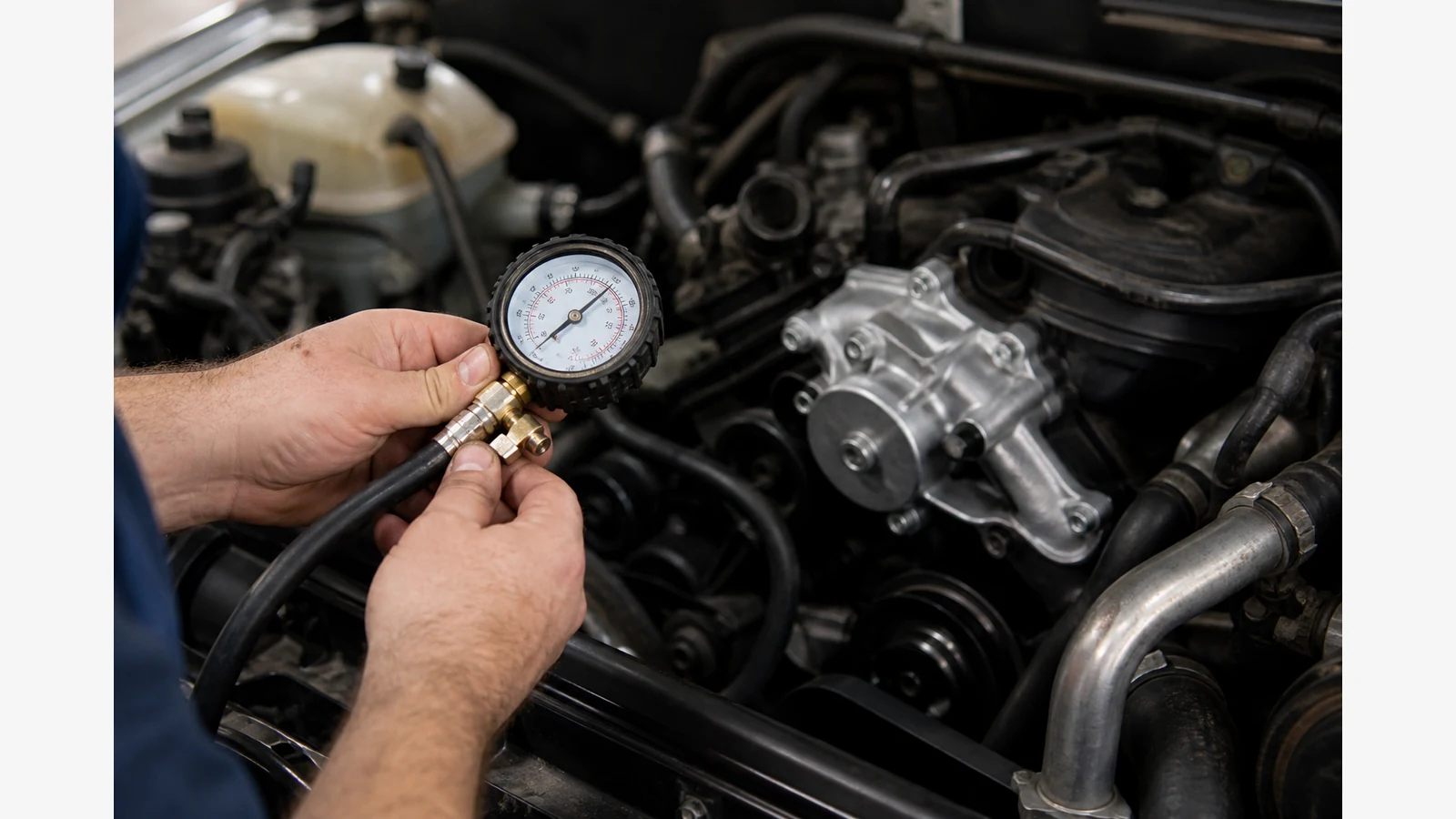
Pressure Test After Water Pump Replacement Uk
Any time you open the cooling circuit — water pump, heater matrix, radiator or multi-hose jobs — pressure-retest cold before handing the car back. A seal check and a bleed/vacuum refill are separate steps: first prove the joints hold pressure, then deal with air locks so the customer does not return overheating.
Why retest beats a hopeful road test
UK tool instructions explicitly call for a retest after repair to confirm the system is sound, and pressure testing is a standard way to expose water-pump, hose and housing leaks. Sealey VS0011 instructions on post-repair retesting (PDF) make that retest part of the procedure. UK guidance on failing water pumps also ties diagnosis to pressure testing and stresses proper bleeding after replacement to avoid hot spots — see Auto Rider UK on water-pump failure signs and testing.
Post-repair pressure-retest checklist
- Confirm hose clamps and fasteners are correctly seated per the vehicle procedure (do not guess torque values from a blog).
- Fit the correct pressure-test adapter to the expansion/radiator neck on a fully cold system.
- Pump only to the cap/vehicle rating and perform a timed hold.
- Inspect the new pump weep/seal area, adjacent housings, and every disturbed hose joint for spray or seepage while pressure is applied.
- If the gauge falls, fix the leak path before any bleed or vacuum refill.
- If the gauge holds, proceed to air-lock prevention as a separate job.
Professional kits list the water pump among leak locations found by pressurising the circuit — summarised on the Laser Tools cooling-system pressure-test kit page.
If sealed: prevent air-lock comebacks
A hand pressure test does not replace bleeding where the vehicle requires it. If workshop air is available, vacuum refill can help fill without trapped pockets; otherwise follow a controlled OEM bleed. On this site, continue with fixing coolant-system air locks and using a coolant vacuum refill kit. For intermittent pre-repair leaks that brought the job in, keep the intermittent coolant leak pressure-test workflow in the bay SOP.
Who should not skip the retest
Skip risk is highest after intermittent pre-repair leaks, multi-hose disturbance, and heater-matrix jobs where a missed clamp costs a comeback. Hand the keys back only after a cold hold passes and the air-management step you chose is complete.